
Chatbots’ endless thirst for clean water
Artificial intelligence has unlimited potential just waiting to be tapped into...and that could be a problem. I share why policy change and regulation surrounding this new tech is so important.
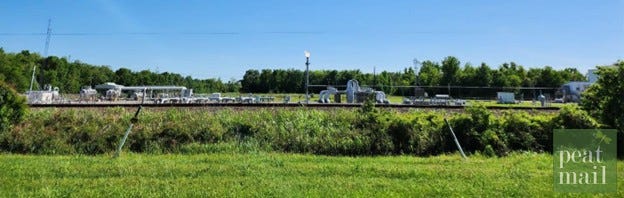
Blinking lights and flares from sprawling oil and gas refineries light my early morning drive along the Mississippi River from Baton Rouge to the marshes of coastal Louisiana. I know I’ve reached my destination when I see smoke billowing from a petrochemical plant just steps from the Intracoastal Waterway. Another plant, producing a petrochemical derivative, sits half a mile downstream. Everywhere I turn, there are visceral reminders of the contaminated air, water, and soil here, in Louisiana’s Cancer Alley. An estimated 200 fossil fuel and chemical manufacturers are packed into this 85-mile-long corridor, believed to be the densest concentration of such facilities in the world.
It comes as no surprise, then, that the success of oil, gas, and chemical companies has had significant health impacts on surrounding areas like St. James Parish, a predominantly Black community of enslaved descendants. Failures of state and federal agencies have forced residents to organize and fight for environmental protection, monitoring, and enforcement – a theme mirrored by communities voicing their concerns about data centers popping up around the world to support artificial intelligence, or AI.
Countless Black activists who have provided guidance on how to organize communities and protest against environmental harm have drawn the hypothetical blueprints on how to hold corporations and government accountable. Out of their efforts came creative, empowering solutions to a variety of environmental challenges, like Detroit People’s Food Co-op, Memphis Community Against Pollution (MCAP), Nature for Justice (N4J), Blacks in Green, The Descendants Project, and more. Reflecting on historical environmental battles spearheaded by people of color, like the Memphis Sanitation Strike of ‘68, North Carolina’s Warren County Protests in ‘82, and the first National People of Color Environmental Leadership Summit of ‘91, the power of self-assembly is clear.
In Cancer Alley, alarmingly high cancer rates, respiratory illnesses, and preterm births gained the attention they deserved when the situation garnered interest from the nonprofit watchdog, Human Rights Watch. The organization conducted extensive research from 2022 to 2024, including interviews with forty individuals in impacted areas and an analysis of publicly available data. Human Rights Watch successfully highlighted an ongoing environmental issue in the state and offered clear solutions for government entities, private industries, and healthcare providers. Their study also elicited written responses from government agencies, even if those responses were uninspired.
While Louisiana’s energy industry clings to a fading global oil market, small towns and cities across the US are ushering in data centers to power AI. Perhaps you are like me - someone who admires AI’s ability to solve bugs in computer code and complete other mundane and painstaking tasks. Or maybe you’re apprehensive, or downright frustrated with the unfettered access that these servers now have to humanity’s biggest secrets. Most people have interacted with AI without realizing it. It’s built into social media sites, virtual assistants like Amazon’s Alexa, Google searches, and more. People have used AI for everything from enhancing their own work productivity, meal planning, and budgeting, to companionship through customizable chatbot services. But whether municipalities are lining up to join the AI boom out of admiration, the promise of employment opportunities, or political bribes, the outcome is the same – these centers need huge amounts of resources.
Land, energy, and water demands of AI
A single AI facility might extend over hundreds of thousands of square feet. In fact, Amazon recently acquired more than 9.5 million square feet of land in Phoenix, Arizona, for a new data center. There’s somewhat of a tradeoff when it comes to square footage and energy efficiency, too. Server aisles with poorly designed cooling systems must be kept farther apart to manage the heat, resulting in even larger data centers.
An average query to Google Gemini, an AI-powered chatbot assistant, uses just 0.24 watt-hours of electricity, which is comparable to that of a Google search. The number of daily queries and electricity used for more complicated queries is undisclosed. Due to the sheer demand for AI, electricity consumption by data centers is projected to increase exponentially in the coming years. In northern Viriginia, dubbed “Data Center Alley”, growing data centers will soon consume 11,077 megawatts of power. That’s enough electricity to support more than 9 million households.
Then, there’s water consumption. Evaporative cooling used to chill the computer chips requires a constant supply of water. It can’t be just any water, either – treated freshwater is necessary to prevent mechanical issues, odors, and potential health risks. Water demand can be even higher with newer, more energy-intensive chips.
Each data center consumes an estimated 3 million gallons of water per day, on average. Although that’s a small number compared to the demand of local agriculture, there’s a big caveat. Water used for agriculture can replenish the surrounding natural ecosystems after use through groundwater recharge or evapotranspiration. In contrast, heated water quickly evaporates, leaving behind nothing but air. Water used in evaporative cooling is essentially lost.

China is resolving land and water limitations by moving its data centers underwater. Water from the South China Sea passively cools servers protected by a waterproof steel hull at the Hainan Underwater Intelligent Computing Center. Although the change eliminates the demand for freshwater, it brings new concerns about ocean warming, which could have compounding effects on environments like coral reefs already vulnerable to marine heatwaves.
Who benefits from all of this?
Tech industry proponents point to high-paying jobs, economic contributions through property tax and consumer spending, and infrastructure projects as benefits to host cities. Yet, some data centers can run with as little as 200 employees, and many big tech companies receive tax breaks on property or sales. Many states have not disclosed or only partially disclosed their data center revenue losses. Those that do have lost hundreds of millions of dollars in annual tax revenue. In return, tech companies were exempted from taxes on items like construction materials, servers and server racks, power-grid connections, cooling systems, and more. Texas has potentially taken more losses than any other state, with revenue losses of more than 1,000% in recent years.
Many AI tools are free. Tech companies are more interested in engagement, which provides ample data to improve ad targeting, refine the product, and encourage users to spend more time with their chatbots, or some other AI-powered tool. The largest cost is, undoubtedly, the one paid by our environment.
Communities are starting to recognize a problem with data centers’ seemingly limitless need for municipal water, regardless of their politics. For example, the city of Tucson, Arizona successfully opposed a giant Amazon data center. Other communities are finding out that state laws limit decision-making at the local level, like in Tucker County, West Virginia. Public policy experts have recommended that states avoid tax incentives for data centers while implementing mandatory reporting requirements to track environmental damage. Data centers that have already received tax breaks should meet high energy efficiency standards, use on-site renewable energy, and contribute to the modernization of the power grid. Government agencies could protect tax revenues received by schools, regulate utility costs, and re-evaluate their progress towards state climate goals.
What vulnerable communities can teach us about fighting environmental injustice
AI’s unquenchable thirst for water, land, and energy presents a problem with eerie similarities to drinking water contamination in black communities across America. Crises such as lead poisoning in Flint, Michigan highlighted the tangible effects of structural racism on peoples’ health and well-being. Careless cost-cutting and inaction at all levels of government persisted for a year and a half before the state admitted there was a problem. It took persistent grassroots organizing, collaboration with doctors and researchers, and extensive media coverage for that community to finally get justice.
Environmental injustice doesn’t start and stop with communities like Flint. It isn’t limited to singular events, or specific areas, as seen in the indiscriminate expansion of AI data centers. Access to safe water has historically been a racialized issue, but the breakdown of Flint’s old residential lead pipes could have happened in many older US cities. Eighty percent of the U.S. population lives in urban areas, which often feature aging infrastructure like roads, bridges, and water systems well past their expiration dates. Many US cities are hundreds of years old - New York City is more than 400 years old, for example. Millions of people likely traverse the streets of Manhattan each day without thinking about the aged and aging systems that exist below their feet. But the health effects of bathing, drinking, swimming, playing, and living with such antiquated water systems is a huge problem that persists as each year passes and components break down more and more. These are issues that deserve our consideration.
Whether it’s drinking water contamination or water scarcity and soaring utility costs, communities that have successfully organized in spite of social abandonment from the very agencies that were created to protect them are testaments of how to move forward. But, we should not forget that for each town with contaminated streams and rivers that have fought and won their cases, there are also cases lost and forgotten about, and more still being fought and fighting for media attention.
As a Freshwater & Marine Scientist with a Ph.D. minor in Culture, History, and the Environment, I believe that a sustainable transition requires an upheaval of our concept of “capitalism”. I envision a future that embraces a rapid transition to renewable energy sources, that strengthens the working class, and understands the real costs of environmental harm. World leaders have repeatedly failed the youth by desperately clinging to outdated visions of Earth’s future, but those generations are the ones who hold many answers that we need to hear. With each passing year, it becomes clearer that community leaders have the real power and spirit necessary to help us organize against environmental issues that politicians may never attempt to solve.
Lastly, I think we owe it to the future of humanity and our planet to continue fighting for what is morally right; against further alteration of our climate or natural environments, against racism and xenophobia, and against the relentless pursuit of profits over people. When asked for comment, Catherine Coleman Flowers, environmental & climate justice activist and author of WASTE: One Woman’s Fight Against America’s Dirty Secret, shared with me, “We have to … use technology in a way that improves the lives of everyone while protecting the planet.” Reflecting on her words, I realize how many times I’ve dreamt up an all-or-nothing solution to this world of computer-generated ideas and gotten it wrong. Maybe the answer to chatbots’ endless thirst for clean water isn’t to banish the internet, or throw our hands up and let the meltwater from ancient glaciers cover us all. Maybe the answer lies in where we place the importance of our planet.
That might mean taxing the corporations that are driving up utility prices, breaking up monopolies, protecting unions, and approving less data centers. It could also mean reframing the government’s priorities so that it can keep pace with the ethical and legal concerns about AI. For others, it could mean inventing new technologies to store and process data in more efficient ways. I’m not sure whether Flowers meant to or not, but her statement perfectly encapsulates the United Nations Sustainable Development Agenda for 2030: People, Planet, Prosperity, Peace, and Partnership.
This article was originally written for Mambowe Magazine.
The parallel between Cancer Alley and 'Data Center Alley' is stunning becuase both rely on the same calculus—externalizing costs onto communities while privatizing profits. What strikes me is how the invisibility of digital infrastructure mirrors the invisibilty of petrochemical impacts until communities organize. I've watched this pattern repeat in tech deployments where convenience overshadows consequence until the bill comes due. The Flint water crisis showed us that infrastructure age plus institutional indifference creates catastrophe, and we're setting up the same conditions now.